Highway 19A · The Oceanside Route
Once Upon
A Tail Farm
Twenty-two and a half acres between the mountains and the strait, in Qualicum Bay. Goats with strong opinions, hens in fancy dress, and greens cut the morning you eat them.
The farm, right now
Updated August 2026We are building this farm in the open, one season at a time. Rather than describe a place that does not exist yet, here is exactly where things stand. Bookmark this page and watch it fill in.
- This monthFencing, water lines and the coop are being finished ahead of the birds. The barn site is pegged out.
- September 2026Twenty-five to thirty laying hens arrive, silkies among them. First eggs roughly six weeks later.
- October 2026Our first two Nigerian Dwarf does come home. This is the year they settle, not the year they work.
- Winter 2026Barn and hay building go up. Greenhouse frame raised. Microgreen racks built and tested.
- Spring 2027Goat kids, ten beehives, the orchard planted, and the roadside farm stand open on 19A.
- Spring 2027Tranquil Tails opens: three six meter bell tents, dogs welcome, profits to the sanctuary.
- 2027 seasonFarm tours and goat yoga open for booking. Numbers kept small, on purpose.
What twenty-two acres looks like before it looks like anything
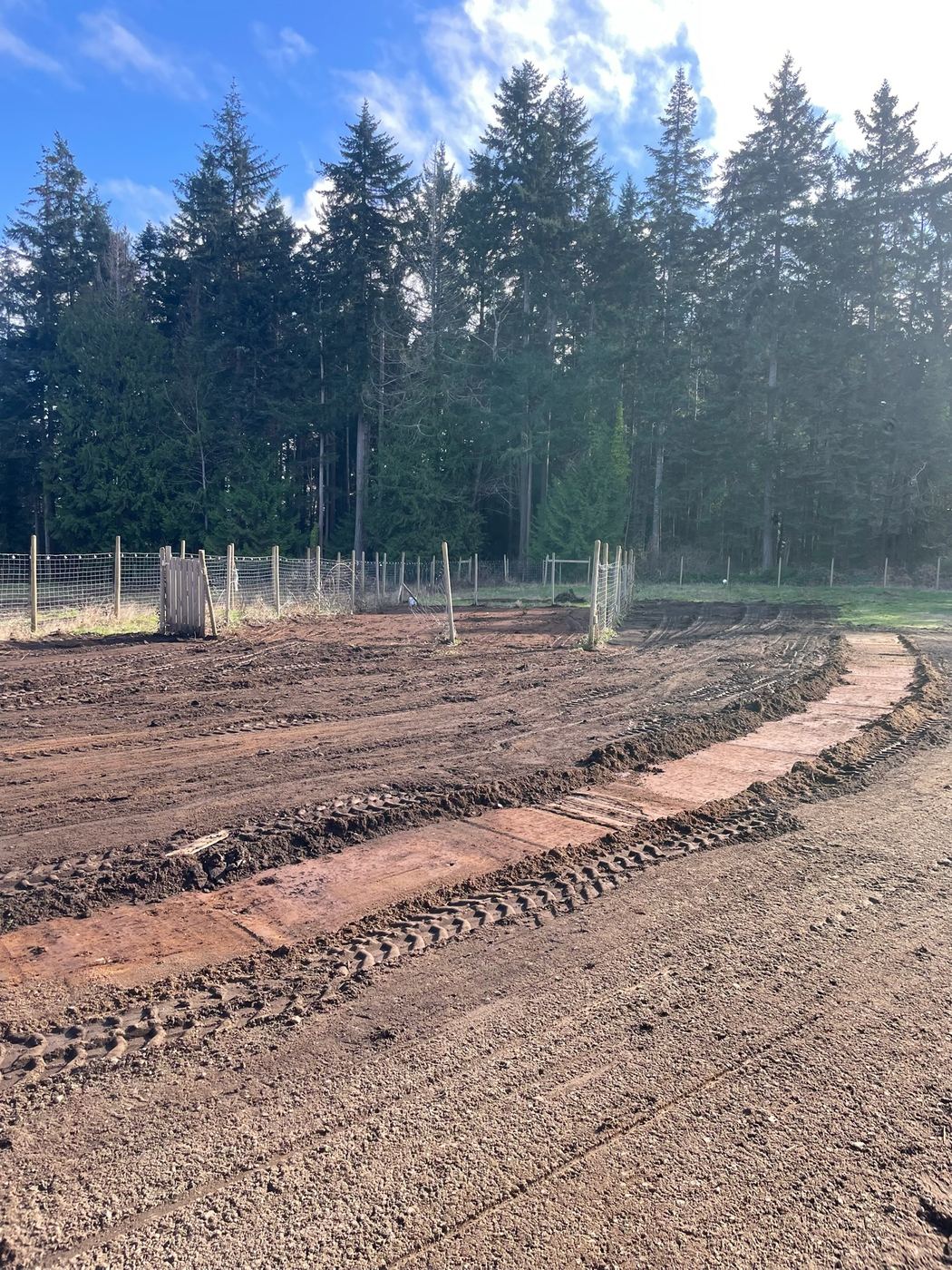
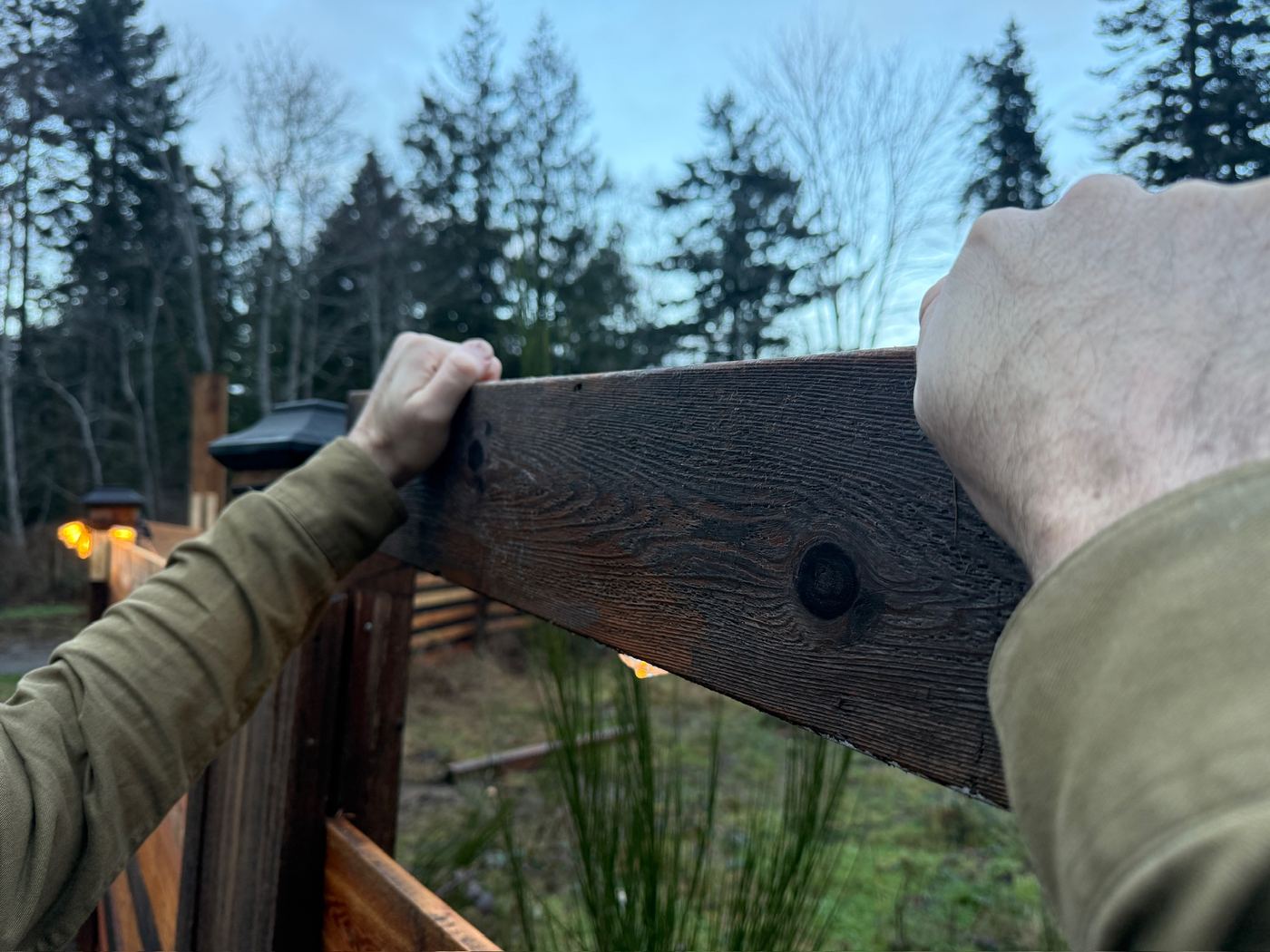
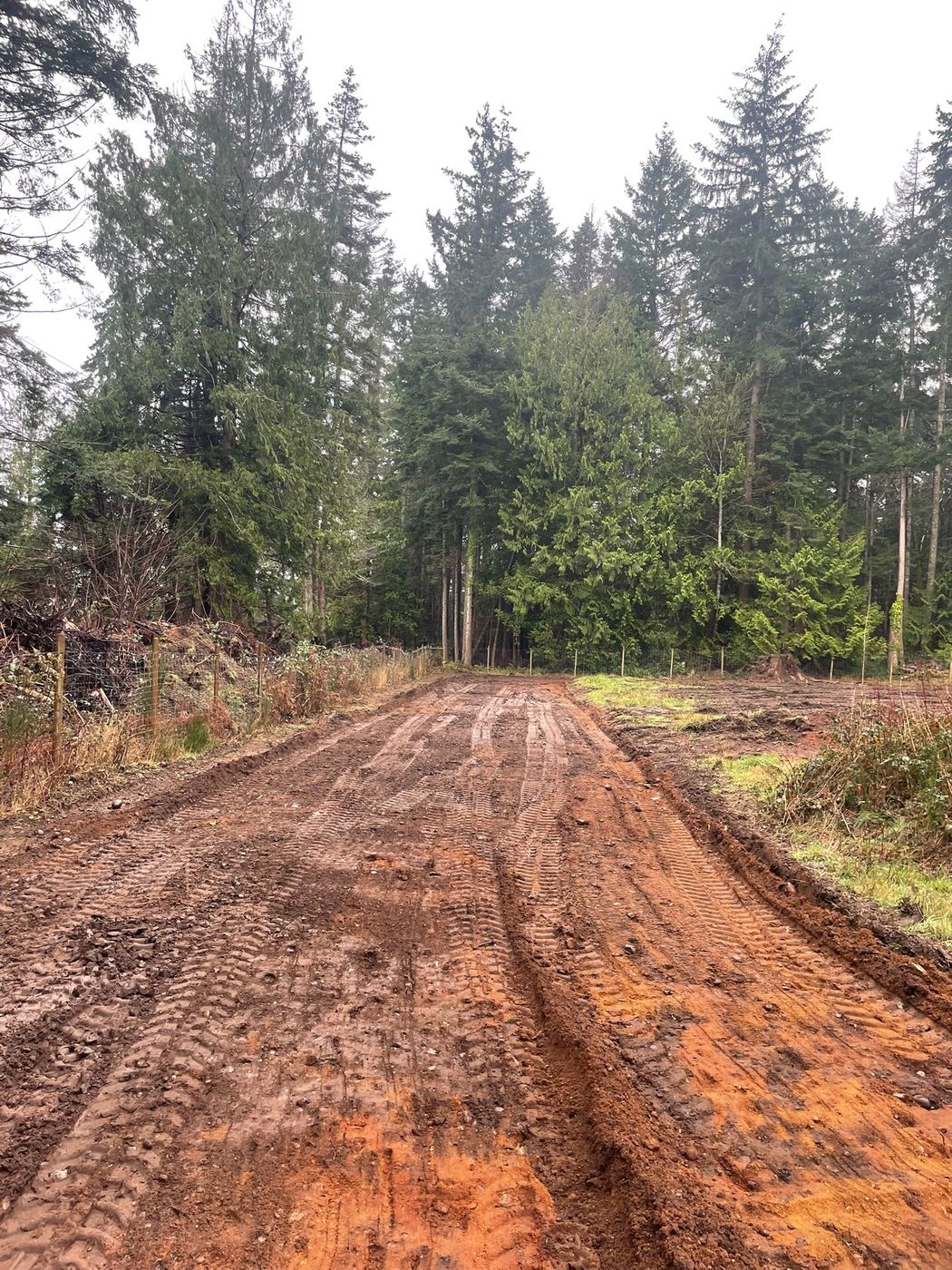
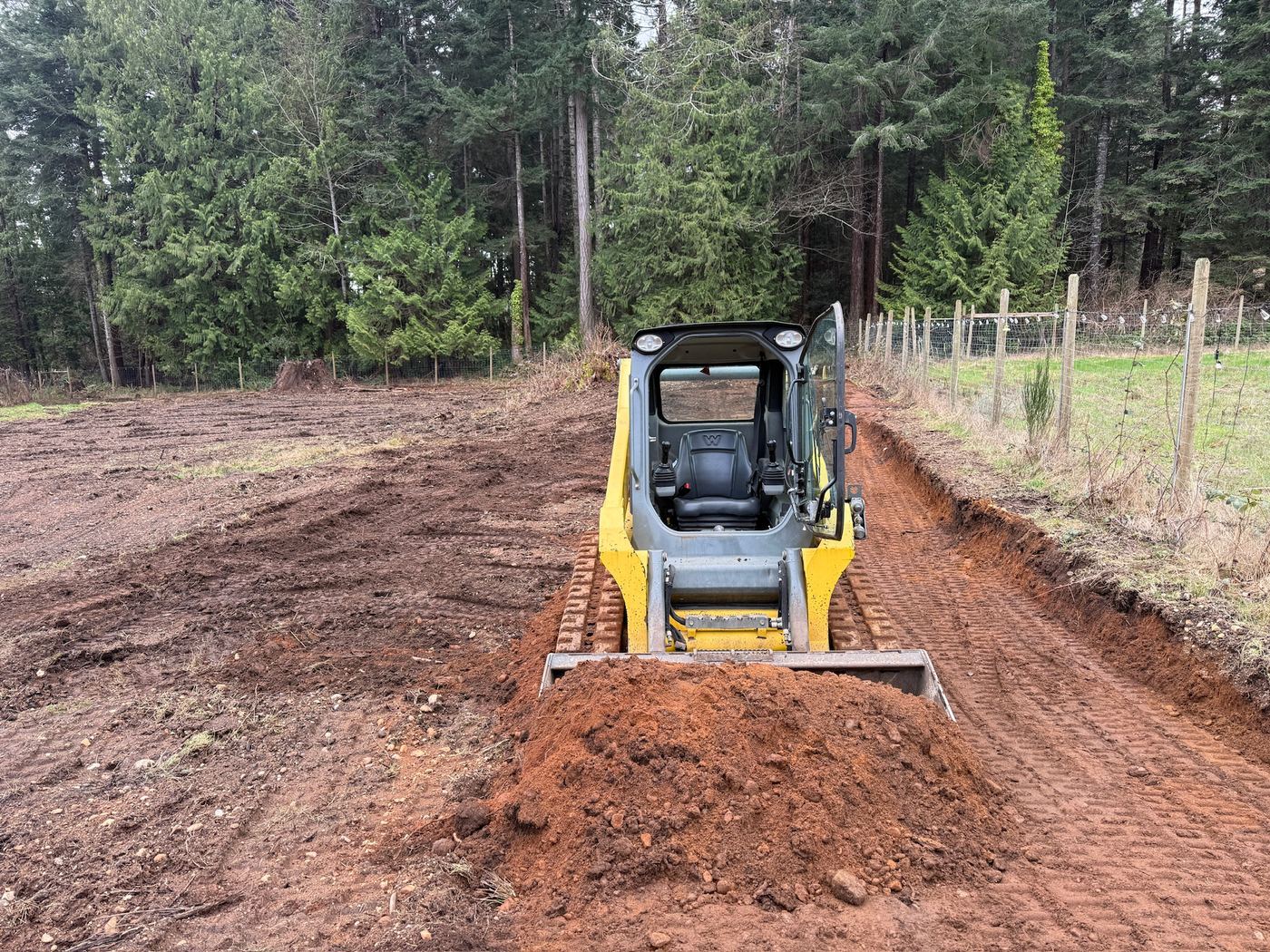
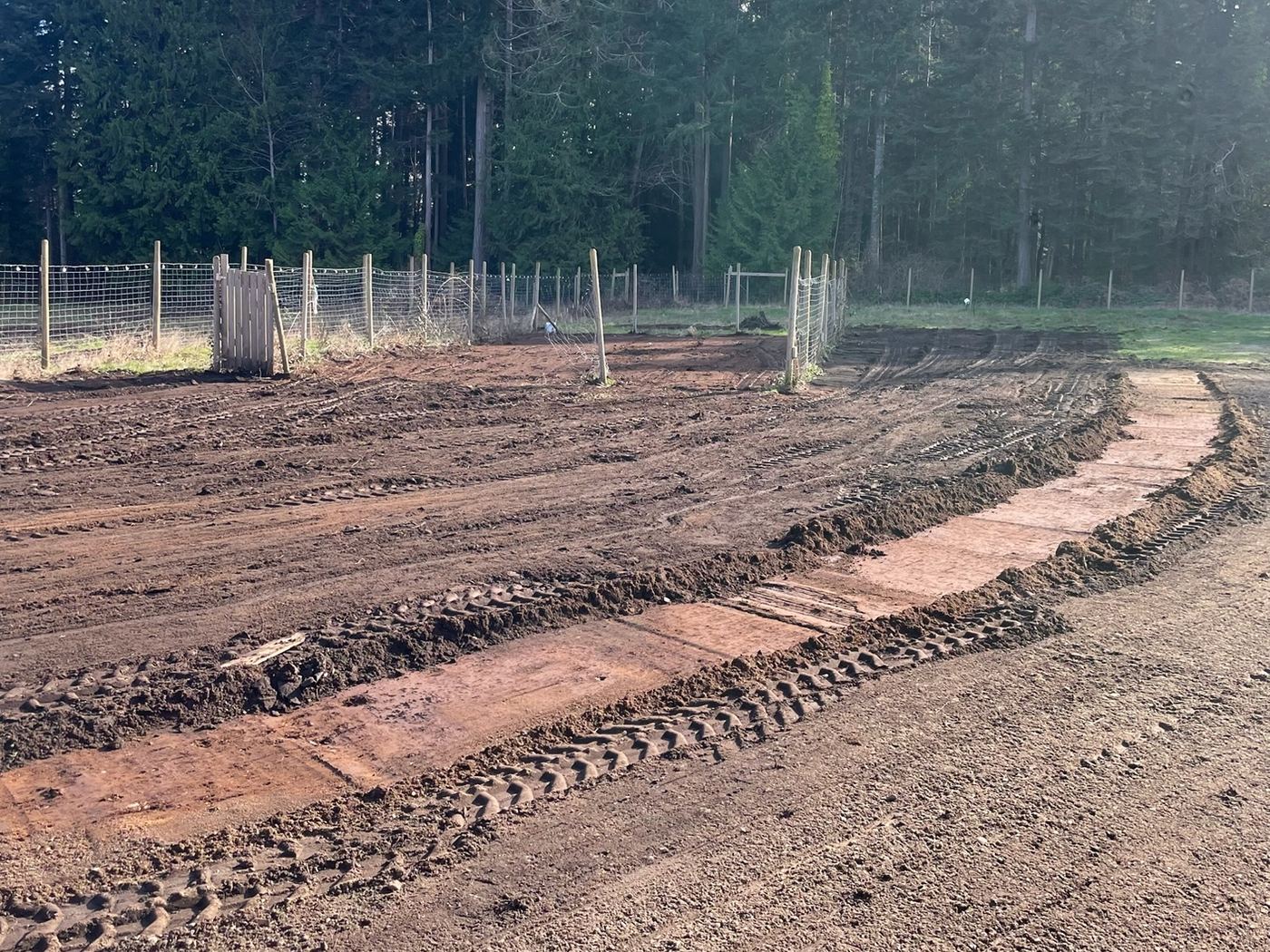
No animals to photograph yet, and no barn. What we have is fence line, cleared ground and a great deal of moved soil. We would rather show you that than nothing.
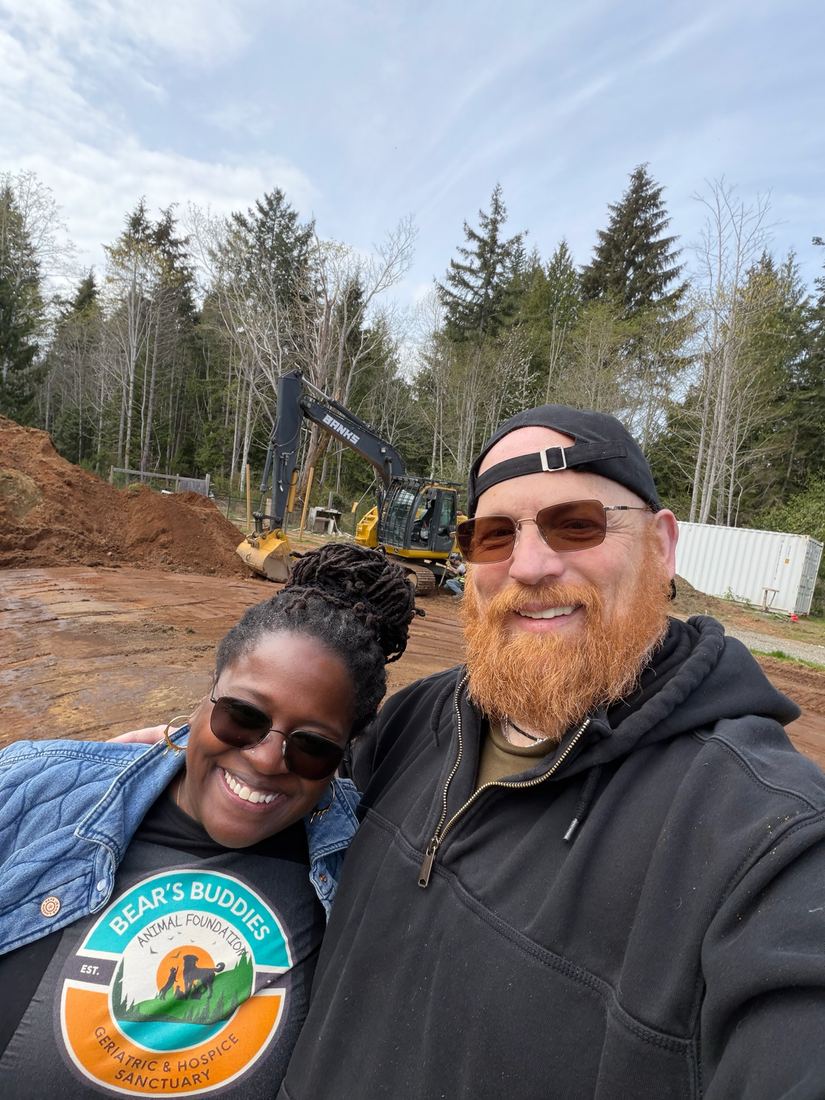
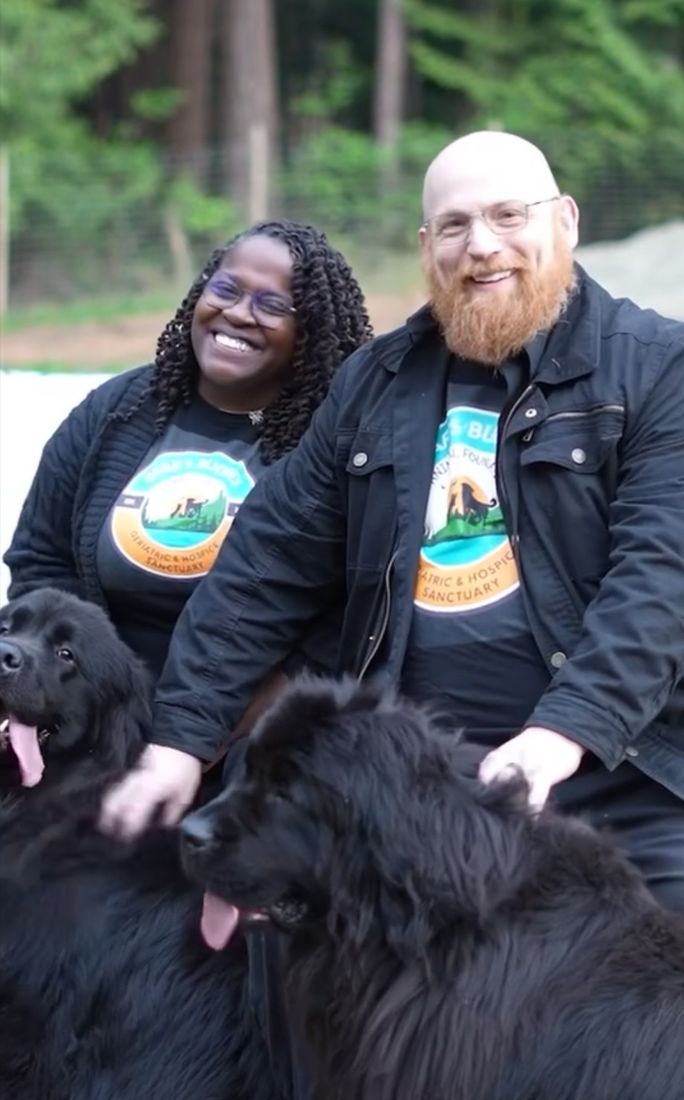
We are Kimberly and Keith Spinks. We spent two years trying to buy this land and finally managed it in 2026, and we have been outside ever since. Kimberly is a practicing veterinarian, which means the animals here get the sort of care most farms have to phone for, and she is also the one who plans and designs the place, building by building. Keith runs the numbers and handles security, a field he has worked in for over thirty years, which together are the difference between a farm that lasts and a farm that was a lovely idea. Between us we have a barn to raise, an orchard to plant, and a great deal to learn, and we would rather you watched us do it than arrived once it was all tidy.
The name is a small joke we have decided to commit to entirely. Every animal here gets a name, a story, and they all have a tail. Some of them will disappoint you by being asleep.
Five reasons to turn off the highway
The animals
Nigerian Dwarf goats, silkie hens that look like they were drawn rather than hatched, and two micro-mini Highland heifers who will be the size of a large dog and behave like one.
Meet themTours and goat yoga
Small guided groups, an hour on the land, and a yoga mat surrounded by goats who have no respect for your practice. Good for birthdays, reunions, and grandchildren visiting from away.
Plan a visitThe farm stand
Ungraded eggs from the gate, microgreens cut that morning, cut flowers by the bucket, goat milk soap, and honey once the bees have had a season to settle in.
See the standStay the night
Tranquil Tails, three six meter canvas bell tents on the far side of the property, with the water just across the road. Dogs welcome, which is harder to find around here than it should be. Profits go to the sanctuary.
See Tranquil TailsBear's Buddies
A geriatric and hospice sanctuary, run as its own registered organization. Old animals nobody will adopt, and animals with a terminal diagnosis whose people cannot manage the last stretch alone. Separate books, separate mission, same fence line.
Learn about Bear's BuddiesTwenty minutes past Parksville, and worth the drive
Qualicum Bay sits on the Oceanside Route, the old highway that hugs the water between Parksville and Courtenay. If you are already driving it for the beaches, the caves at Horne Lake, or simply because it is the prettier road, we are a very easy stop.
Parking is free and on gravel. There is no admission charge to visit the farm stand.
Get the letter from the farm
Once a month, and only when there is something worth saying. What is laying, what is blooming, when tours open, and which goat has learned to open which gate.
Our Story
There is a version of this story where two sensible people looked at twenty-two and a half acres of Vancouver Island, did the arithmetic, and walked away. That is not the version that happened. We first stood in this field in 2024, listened to the wind come up off the strait through the alders, and understood that we were going to spend the rest of our lives here whether it made sense or not.
Kimberly is a veterinarian, and the one who plans and designs this place. The span tables, the drawings, where the barn sits and which way the greenhouse faces: all of that is hers, worked out on paper long before anyone picks up a tool. It is the part most farms get wrong and then live with for thirty years.
Keith keeps the books and handles security, which is his actual profession rather than a farm chore he inherited. He has spent more than thirty years in security and asset protection, and he applies the same thinking here: what is worth protecting, what is most likely to go wrong, and what it costs to be ready for it. On a property with livestock, visitors and a roadside stand, that is not a small question.
He also works out what we can afford, in what order, and how long it has to last, which is the least romantic job here and the one that decides whether any of the rest actually happens. Every plan on this site has been through him, and several of them came back smaller.
The building itself belongs to other people. Local tradespeople, volunteers who turned up for a weekend and came back, family who were handed a shovel and not much choice, and Kimberly, out there with them. Almost nothing here was put up by two people alone, and we are not going to tell the story as though it was.
Understanding it and owning it turned out to be two very different things. It took two years to get from that afternoon to a set of keys. There were stretches where the sensible advice was to let it go and look at something easier, and more than one point where we thought that was how it would end. We are not going to pretend that was a pleasant education. It was simply the price, and we kept paying it because we could not talk ourselves out of the place.
It became ours in 2026. It came with pasture, a great deal of blackberry, and the kind of quiet you only get on the old highway. Since then we have been fencing, running water, arguing pleasantly about barn placement, and learning that every job on a farm contains three smaller jobs you did not know about.
We mention the two years because it explains the farm you are looking at. Nobody waits that long for a piece of ground and then rushes what they put on it.
Why a veterinarian starts a farm
People assume the vet part is a marketing line. It is not. It changes how this place runs, in ways you will actually notice when you visit.
It means quarantine protocols for every new animal before it joins the herd. It means we know what a sick goat looks like on day one instead of day four. It means the hens get treated as a flock with a health plan, not as livestock that either survives or does not. It means when you ask us a question about an animal, you will get a real answer, including the times when the answer is that we do not know yet.
It also means we say no to things. We are not going to run a farm with fifty animals we cannot individually watch. Small is a decision here, not a stage we are hoping to grow out of.
We are not a petting zoo and we are not a theme park. We are a small working farm that lets people in.
What we are actually building
Four things, running alongside each other:
- Animals we breed and keep well. Nigerian Dwarf goats, laying hens and silkies, and a pair of micro-mini Highland heifers.
- Food we grow. Microgreens year round under lights and glass, mixed vegetables and cut flowers through the season, an orchard going in that will take a decade to properly earn its keep.
- A reason to stop. A farm stand on Highway 19A, guided tours, goat yoga, and private bookings for groups who want the place to themselves.
- Somewhere to finish. Bear's Buddies Animal Foundation, a geriatric and hospice sanctuary for companion animals, which is its own registered organization with its own mission and its own accounts.
What we believe, stated plainly
- The animals come first, and it is not close. If a tour would stress an animal, the tour does not happen. If a goat has had enough of people that day, she goes back to the paddock and we tell you why.
- Small on purpose. Fewer animals, better watched. Fewer visitors at a time, better hosted.
- Honest about the state of things. This is a farm in its first year. Some of what we describe is a plan with a date on it. We will always tell you which is which.
- Local first. Our greens are meant for kitchens within an hour of here. Our eggs are meant for the neighbours. We are not trying to ship anything anywhere.
- You are allowed to ask anything. How the animals are fed, what happens to them, what we do when things go wrong. Ask. We will answer.
About the name
Once Upon A Tail. It is a pun, we know exactly how much of a pun it is, and we are keeping it. Every animal that lives here gets a name and a story, and the storybook framing is the honest version of how we think about this place rather than a coat of paint applied afterwards.
The badge came off Kimberly's own drawing board, in pencil, before this was ever a farm. It was drawn by hand and then made round, which is roughly how everything else here has gone too.
The Animals
Everyone who lives here, what they are for, and when you can expect to meet them. Names go up as they arrive.
Nigerian Dwarf goats
Small, loud, extremely clever, and entirely convinced that whatever you are holding belongs to them. A full grown doe stands about knee height on most adults, which makes them the right size for children, for anyone unsteady on their feet, and for a yoga mat.
Our first two does come home in October 2026. They will spend that autumn and winter simply learning the place and learning us. Kids arrive in spring 2027, and that is when the farm properly wakes up.
Milk from our does goes into soap rather than into bottles. Nigerian Dwarf milk is unusually rich, which makes a hard, mild bar that lasts.
Meet them: on farm tours and at goat yoga, from the 2027 season.
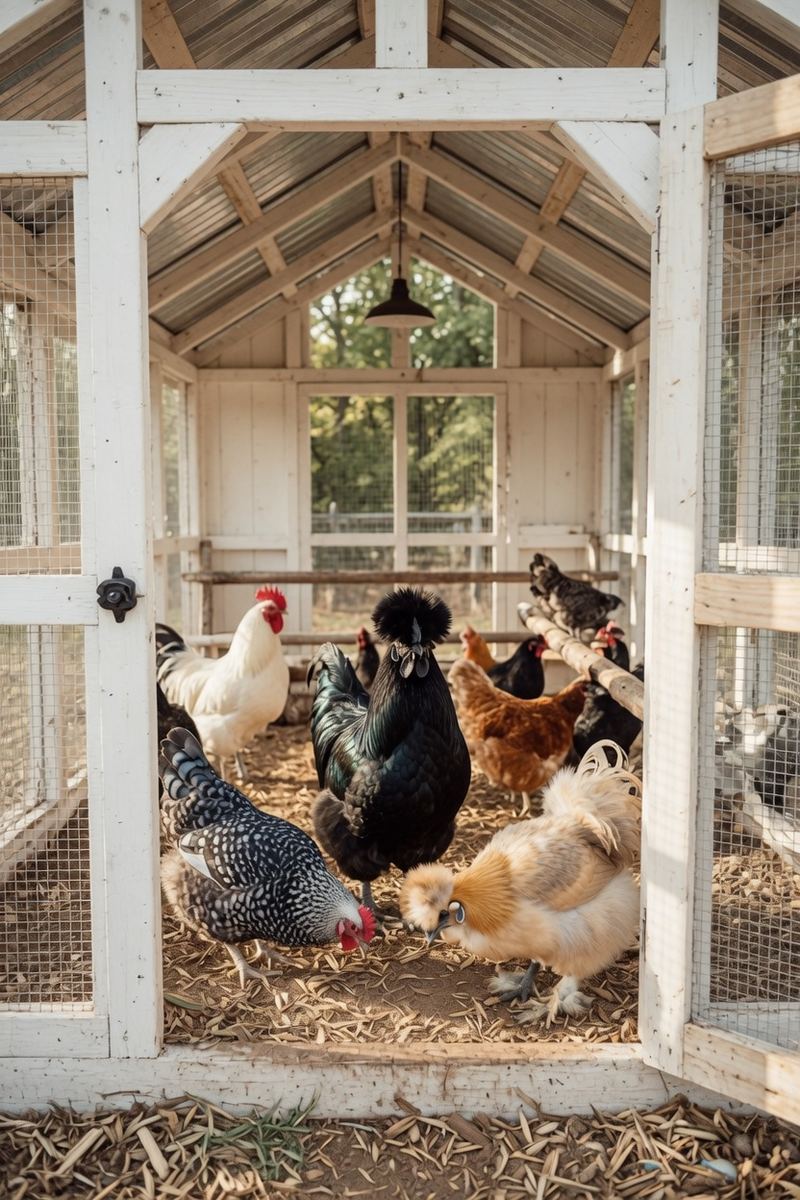
Hens, and rather fancy ones
Twenty-five to thirty laying hens arrive in September 2026, which puts the first eggs on the stand toward the end of autumn. They are a mixed flock chosen for good laying through an Island winter and for temperament, because a calm hen is a hen a four year old can meet.
Alongside them we keep silkies. If you have not met one: they have feathers like fur, black skin, five toes instead of four, and the disposition of a small polite dog. Children tend to lose interest in everything else on the property the moment a silkie walks past.
Meet them: on farm tours. Eggs at the stand once the flock is laying.
Micro-mini Highland cattle
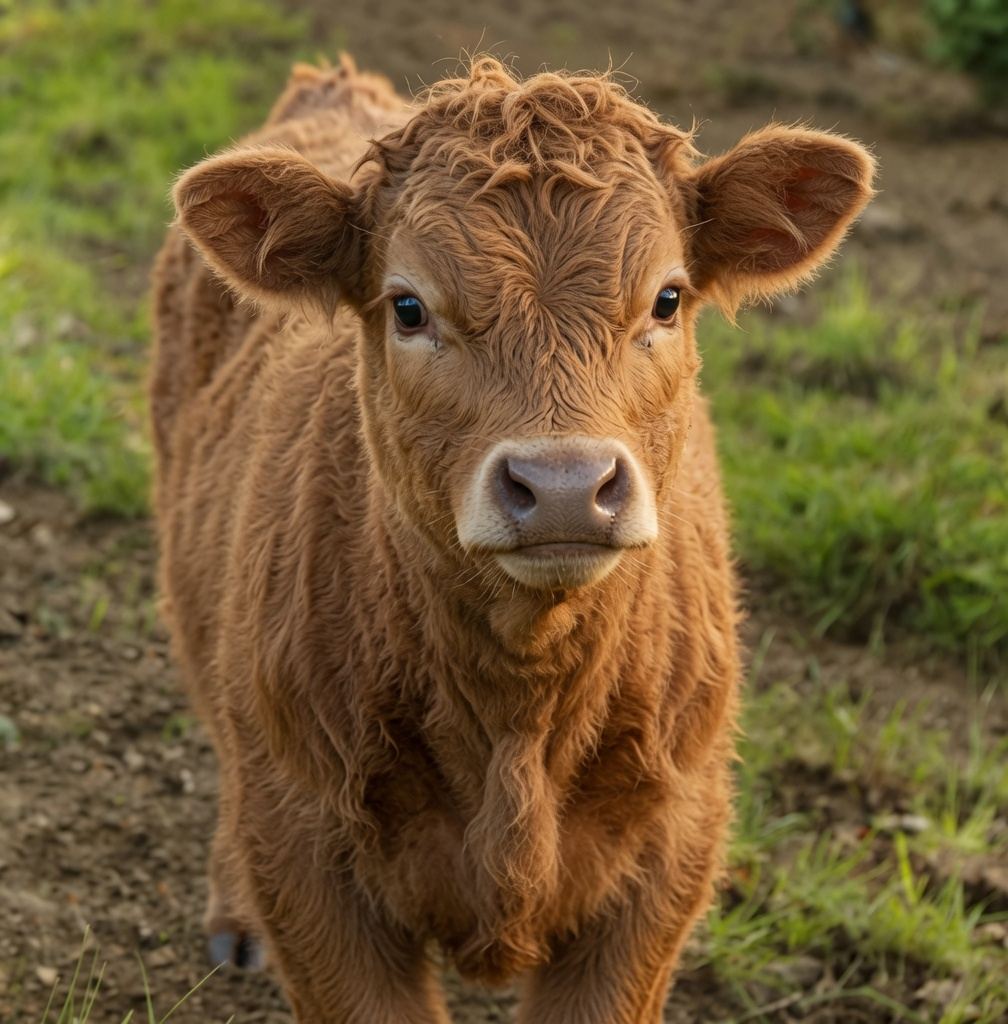
Two heifers, arriving as the fencing and shelter are ready for them. Micro-mini Highlands are a fraction of the size of the cattle you picture, with the same long fringe and the same unhurried temperament. They are the animal people come to see and the animal that photographs best, and they know it.
We are not keeping a bull. Breeding will be done by artificial insemination or by leasing, which is safer for everyone including the cattle, and means visitors are never sharing a fence line with a bull.
Meet them: on farm tours, from the season after they arrive and settle.
Ten hives of bees
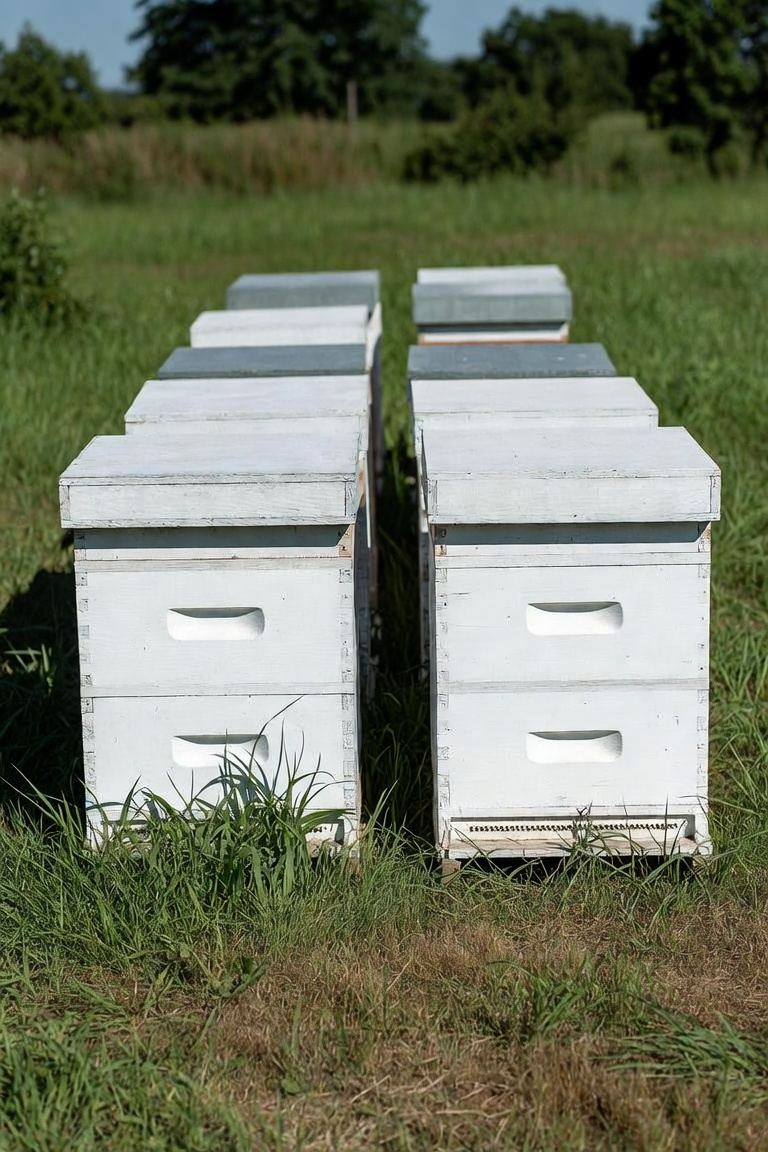
The apiary goes in for spring 2027, sited well away from the visitor paths and downwind of where people walk. Ten hives is enough to pollinate the orchard and the cut flower beds properly, with honey as the happy consequence rather than the point.
Island honey in this valley runs to blackberry, maple and clover, and it tastes distinctly of here. First jars on the stand in late summer 2027 if the season is kind.
See them: from a sensible distance on tours. Nobody is being handed a frame.
How the animals are looked after
Kimberly is a practicing veterinarian and this farm runs on veterinary protocols rather than on hope. That means a few concrete things:
- Every animal is quarantined and health checked before it joins the resident group.
- Vaccination, parasite and hoof programs are on a schedule, written down, and followed.
- Handwashing stations at every animal area, and we will ask you to use them on the way in and the way out.
- Visiting dogs are kept well away from the livestock. They have their own ground and their own route in, and they do not cross into the animal areas. This is not about your dog personally, it is about what any dog can carry onto a farm.
- If an animal is unwell, that paddock is closed to visitors. We will tell you why rather than pretend the animal is elsewhere.
Visit the Farm
Guided tours, goat yoga, and private bookings for groups who would rather have the place to themselves. Every visit is booked ahead and kept small.
Booking opens for the 2027 season. The farm stand opens first, in spring 2027. Join the mailing list and you will hear before it goes public.
Ways to spend an hour here
The Farm Tour
About an hour, guided, on foot. You will meet the goats, the flock, the silkies and the cattle, see the greenhouse and the microgreen racks, and hear how the whole thing actually works. Groups kept to twelve so everyone can hear and everyone gets a turn.
Goat Yoga
Forty-five minutes of gentle, genuinely beginner friendly yoga in the paddock or the barn, depending on the weather, with Nigerian Dwarf goats treating you as terrain. No experience needed and no dignity required. Mats provided. Seasonal, best in spring when the kids are small.
Private Group Bookings
The farm to yourselves for a set block of time. Birthdays, family reunions, visiting grandchildren, care home and community group outings, school and homeschool groups, small work days that are not held in a boardroom. Tell us the group and we will shape it around them.
The Farm Stand
No booking, no charge, no need to tell us you are coming. Pull in off 19A, see what is out, and carry on with your day.
What a visit is actually like
We would rather you arrived knowing exactly what you are walking into, so here is the unglamorous version.
- The ground is grass, gravel and packed dirt. It is uneven in places and it is soft after rain, which on this coast is most of the time between October and April.
- Wear closed shoes you do not mind ruining. Gumboots are the correct answer for eight months of the year.
- Dress for weather that changes. There is shelter, but the tour is largely outdoors.
- An hour on your feet, with places to sit along the way.
- Animals are animals. Sometimes the goats are enthusiastic and sometimes they are asleep in a pile and cannot be persuaded to care about you.
- Please do not feed anyone unless we hand you the food. Wrong food is how a small goat becomes a large veterinary bill.
Accessibility
A good part of our neighborhood is retired, and a good part of our visitors will be grandparents bringing grandchildren. We have designed for that from the start rather than adding it later.
- Parking is level gravel, close to the barn, with room to open a door fully.
- There is one firm, level route that reaches the barn, the goat paddock and the stand without steps.
- Seating at several points along the route, not just at the end.
- An accessible washroom by the barn.
- Tours can be run at whatever pace the group needs. Tell us when you book and we will plan for it.
- Some areas, the pasture and the orchard in particular, are rough ground and will not suit everyone. Nothing essential is out there.
If you are not sure whether the farm will work for someone in your group, write to us before you book. We will give you a straight answer.
Six things we ask
- Dogs stay out of the animal areas. Guests staying at Tranquil Tails are welcome to bring their dogs, and we will show you exactly where they can go and where they cannot. For day visits, tours and goat yoga, please leave your dog at home. Certified service dogs are welcome throughout.
- Wash your hands going in and coming out. Stations are at every animal area.
- Children stay with an adult. Every child needs a grown-up within arm's reach. Gates, water and hooves are all faster than they look.
- Do not feed the animals unless we have put the food in your hand.
- Closed shoes only. No sandals, no bare feet, no exceptions. Hooves are hard.
- Gates stay as you found them. If it was shut, shut it.
We run rain or shine and only cancel for genuinely unsafe weather or for the animals' sake. If we cancel, you get the choice of another date or your money back.
The Farm Stand
A small stand on Highway 19A. Pull in, see what is out, pay at the box or tap your card, carry on up the coast.
The stand is not open yet
Opening spring 2027There is nothing at the roadside to stop for today. The stand itself has not been built, and the hens, the beds and the bees are all still ahead of us. Everything described on this page is what we are working toward for spring 2027, not what is on a shelf this week.
Join the mailing list and you will know the day it opens, rather than finding out by driving past.
What we will sell
None of this is available yet. This is what the stand is being built to carry.
Microgreens
Cut the morning they go out. Pea, sunflower, radish, broccoli and a rotating third tray depending on the season. Sold in a clamshell or, for regulars, in a box you bring back.
Farm gate eggs
Ungraded, sold only here at the gate, which is what the rules allow and honestly the way it should be. Mixed sizes and mixed colors, because that is what actual hens produce.
Cut flowers
Bunches and by the bucket through the season. Tulips and ranunculus first, then dahlias, zinnias, cosmos and sunflowers until the frost stops them.
Vegetables
Whatever the garden is doing that week. Salad and greens, roots, beans, squash in the autumn. Small quantities, picked properly, no cold storage.
Goat milk soap
Made here from our own does' milk. Hard, mild, long lasting, and unscented alongside a few gentle scents. This is where all our milk goes.
Honey
From our own ten hives, from late summer 2027 onward. Blackberry, maple and clover, unpasteurized, in whatever quantity the bees can spare.
What will be out, and when
From spring 2027 onward, and weather on this coast has the final say. This is the plan, not a promise. We post what is actually on the shelf each week on the mailing list.
| Season | At the stand |
|---|---|
| Year round | Microgreens, eggs, goat milk soap |
| Spring | Tulips and ranunculus, salad greens, radish, early herbs, rhubarb |
| Early summer | Beans, peas, summer squash, first dahlias, mixed bouquets |
| Late summer | Tomatoes, cucumbers, zinnias and sunflowers by the bucket, first honey |
| Autumn | Winter squash, roots, kale and chard, apples and pears as the orchard matures |
| Winter | Microgreens, eggs, soap, and a wreath or two if we have time |
How the stand will work
The stand will be self serve. There is an honor box for cash and a card tap for everyone who has not carried a five dollar bill since 2015. Prices are marked on every shelf.
We restock in the morning and again in the afternoon in high season. If a shelf is empty it is because it sold, not because we have gone away.
If you want something held back for you, tell us the day before and we will put your name on it.
About ungraded eggs
Our eggs are ungraded, which under British Columbia's rules means they can be sold directly to you here at the farm gate and cannot be resold by a shop or restaurant. So this is the only place you will find them.
It also means what you get is honest: mixed sizes, mixed shell colors, and the occasional egg that is clearly the work of a hen having an unusual day. Keep them cool and use them quickly. They will be better than anything in a carton.
Know before you drive out
Once the stand opens in spring 2027, the mailing list goes out with what is actually on the shelf that week, so you are not making the trip for tomatoes that sold out on Tuesday. Until then it will tell you how the building is going.
For Chefs
Microgreens cut to order and delivered the same morning, to kitchens between Nanaimo and the Comox Valley. Standing orders welcome, and small kitchens are welcome too.
Cut this morning, on your pass this afternoon
Microgreens are the one thing we grow that is genuinely better for being local, because the clock starts the moment they are cut. A tray harvested here at six is on the Island Highway by eight. Nothing that comes over on a truck from the mainland can do that.
We grow under lights and under glass year round, so the supply does not vanish in February. Standing weekly orders let us seed against your actual demand rather than guess at it, which means less waste for us and a better price for you.
We are a small operation and we intend to stay one. That means we would rather serve a handful of kitchens properly than a long list badly.
Also available to kitchens
- Cut flowers for the dining room, by the bucket, in whatever is genuinely in season rather than whatever a wholesaler has flown in.
- Edible flowers and soft herbs through the growing season, grown alongside the greens.
- Small vegetable lots when we have a surplus worth offering. We will tell you what is coming rather than have you guess.
Our eggs are ungraded and can only be sold at the farm gate, so unfortunately we cannot supply them to a restaurant. We would if we could.
Start a conversation
Tell us what you use, roughly how much, and how often, and we will tell you honestly whether we can do it well. If we cannot, we will say so and probably point you at someone who can.
Samples are available to kitchens once production is running, from spring 2027.
 Geriatric & Hospice Sanctuary · Est. 2022
Bear's Buddies Animal Foundation
A geriatric and hospice sanctuary for companion animals. We take in old animals nobody is going to adopt, and animals with a terminal diagnosis whose people cannot carry the last part of the road. It shares our fence line and our veterinary care, and nothing else. It is its own registered organization, established in 2022, with its own mission and its own accounts.
Who we take in
Two kinds of animal come to Bear's Buddies.
The old ones. Animals who have outlived their people, or outlived their family's ability to care for them. Fifteen year old dogs, cats with kidney disease, animals who are perfectly good company and will simply never be chosen at a shelter because there is a puppy in the next run. They are not sick. They are just old, and old is not a condition anyone should be put down for.
The ones with a diagnosis. This is the harder group, and it is the reason the foundation exists. An animal is given a terminal diagnosis. It still has time, and it still has good days ahead of it. But the person who loves it cannot do what comes next, either because the treatment costs more than they have, or because they cannot bear to watch, and often both at once.
Why that matters
When someone reaches that point, there are usually only two options on the table. Put the animal down before it is time, or watch it go downhill without the care it needs. Both are terrible, and people are making that choice every week in this province with nobody to talk to about it.
Bear's Buddies is a third option. The animal comes here. It gets pain management, veterinary attention, somewhere warm, and company, for as long as it has. When the time genuinely comes, someone who knows it is holding it. That is the whole promise, and it is not a small one.
We want to say this plainly, because anyone reading it who has been in that position is probably bracing for judgement: relinquishing an animal at that stage is not a failure of love. It is very often the opposite. People come to us ashamed, and they should not be. If you are somewhere near that decision right now, write to us before you decide anything.
Kimberly is a practicing veterinarian, which is what makes any of this possible. Hospice care for an animal is clinical work, not just kindness. It means pain control done properly, knowing what a good day and a bad day actually look like, and being able to tell the difference between an animal that is declining and an animal that is suffering.
We are small, we will stay small, and we would rather do this well for a handful of animals than badly for a great many.
Why it is kept separate
This matters and we want to be clear about it. The farm is a business. The sanctuary is a charitable organization. They are not the same thing, and money does not move casually between them.
- Buying eggs, greens or a tour ticket from the farm is not a donation, and we will never suggest that it is.
- Donations to Bear's Buddies go to Bear's Buddies and are accounted for separately.
- Sanctuary animals are not part of the farm's tour program or its breeding program.
- The two keep separate books, separate branding and separate reporting.
We are telling you this because plenty of operations blur that line, and the blurring is usually deliberate. We would rather you knew exactly what your money is doing.
How it is funded
Tranquil Tails, the glamping site on the far side of the property, exists to fund the sanctuary. Its profits go to Bear's Buddies. Staying there is a purchase rather than a donation and carries no tax receipt, but the money it makes ends up here.
That is deliberate. A sanctuary funded only by appeals is a sanctuary that shrinks every time people are having a hard year, and hospice care does not pause when donations dip. An animal partway through its last months cannot be told to wait.
How to help
- Give. Every dollar goes to pain medication, veterinary care, feed and bedding for the animals here. Hospice care is not cheap, and it is the least fundable thing in the animal world because there is no happy adoption photograph at the end of it.
- Give time. Volunteer days will be posted once the sanctuary side is properly set up.
- Give things. There is always a list: hay, bedding, fencing, feed.
- Talk to us early. If you are facing a diagnosis you cannot manage, write to us before you make any decision. Space is genuinely limited and we cannot say yes to everyone, but we can talk it through with you, and sometimes the answer is help that lets you keep your animal at home rather than give it up at all.
Charitable registration details will be posted here once they are confirmed.
Tranquil Tails
Three canvas bell tents on a working farm between the mountains and the strait. Dogs welcome. Every dollar of profit goes to Bear's Buddies Animal Foundation.
Opening spring 2027. We are in planning and setup now. Join the mailing list and you will hear when dates open.
What it is
Three six meter Lotus Belle tents, pitched well back from the animal paddocks with the treeline behind them. Six meters across is larger than most people picture: canvas, round, tall enough in the middle to stand up and walk about, and considerably more comfortable than the word camping suggests. Proper beds, not airbeds.
Facilities are outdoors and shared, and that includes the showers. We would rather tell you that plainly now than have you find out at ten o'clock at night. An outdoor shower on a summer evening on this coast is one of the better things available to a person, and in February it would be an act of madness, which is part of why we run a season rather than a year.
This is glamping on a farm, not a hotel with a field attached, and the people who love it will be the people who wanted exactly that.
Three tents is the whole site. It will never be a campground. On any given night there are at most three groups here, which is the entire point.
Dogs are welcome, and that is deliberate
Finding somewhere on this coast that will take your dog without treating it as a problem is harder than it should be. Tranquil Tails was designed around dogs from the start rather than tolerating them afterwards.
Your dog has its own ground, well clear of the livestock, and its own way in and out. There are rules and we will walk you through them when you arrive. They are not flexible, and the reason is straightforward: a dog does not have to be badly behaved to carry something onto a farm that is dangerous to goats, cattle and poultry. Keep to the rules and your dog is genuinely welcome here.
The farm animals stay behind their own fences. Guests can book onto a tour or a goat yoga session like anyone else, without the dog.
Where the money goes
Tranquil Tails exists to fund Bear's Buddies, a geriatric and hospice sanctuary for companion animals. The profits go to the sanctuary, which pays for the pain medication, the veterinary care and the warm dry room that let an old or terminally ill animal finish its life comfortably.
We want to be precise about what that does and does not mean, because this is exactly the sort of claim businesses make loosely. Booking a tent is a purchase, not a donation. You are buying a night on a farm at a fair price, and you will not receive a tax receipt. What happens afterwards is that the profit from your stay goes to the sanctuary rather than to us. If you would like to give to Bear's Buddies directly, that is a separate thing and you can do it whether or not you ever stay here.
Three separate operations share this land: the farm, which is a business; Tranquil Tails, which is a business; and Bear's Buddies, which is a charitable organization. Separate books, separate reporting. We keep them distinct on purpose and we will always tell you which one you are dealing with.
What is nearby
You are on the Oceanside Route in Qualicum Bay, with the water directly across the road, which is a good base for more than it looks. The beaches at Qualicum Bay and Deep Bay are minutes away. The caves at Horne Lake are a short drive inland. Qualicum Beach and Parksville are twenty and thirty minutes south, Courtenay and Comox forty minutes north, and the whole stretch is quiet in a way the busier parts of the Island no longer are.
Or you can stay put, walk the property, and watch a goat do something inexplicable. That is a legitimate way to spend a day here.
Good to Know
The questions we get asked most, answered without any marketing in the way.
Are you open right now?
Not yet. The farm stand opens in spring 2027 and tours and goat yoga open for booking in the 2027 season. Everything on this site with a date attached is a plan we are actively working toward, and the "farm, right now" panel on the home page is kept current.
Do I need to book?
For tours, goat yoga and private groups, yes, always. Group sizes are small and they will fill. For the farm stand, no. Turn in off the highway whenever it is open.
Can I bring my dog?
If you are staying at Tranquil Tails, our glamping site, yes. We have designed for dogs deliberately, with their own space well clear of the livestock and a set of rules we will go through with you on arrival. Those rules are not flexible, because a dog does not have to be badly behaved to carry something onto a farm that is dangerous to goats, cattle and poultry.
For day visits, tours and goat yoga, please leave your dog at home. Certified service dogs are welcome throughout. And please do not leave a dog in a parked car. The gravel lot gets hot.
Is it suitable for young children?
Very. Nigerian Dwarf goats and silkies are close to the ideal size for a small person. Every child needs an adult within arm's reach at all times, and children need closed shoes. If a child is nervous around animals, tell us at the start and we will take it slowly.
Is it suitable for someone using a walker or a wheelchair?
The barn, the goat paddock and the farm stand are reachable on a firm, level route with no steps, and there is seating along the way and an accessible washroom. The pasture and orchard are rough ground and will not suit every visitor, though nothing essential happens out there. If you are unsure, write to us before you book and we will describe it honestly.
What if it rains?
We run anyway. This is Vancouver Island in the rain shadow of nothing much. Bring a coat and boots. We only cancel for genuinely unsafe weather or when the animals need to be left alone, and if we cancel you choose between another date and a refund.
Can I hold a goat?
Usually you can meet one, sit with one, and be climbed on by one. Picking an animal up is our call on the day and depends entirely on the animal. We will always tell you why if the answer is no.
Do you sell animals?
We plan to have Nigerian Dwarf kids available from spring 2027 onward, in small numbers, to homes we have actually talked to. We are not a volume breeder and we will ask you a lot of questions. Write to us and we will put you on the list.
Can I get married here, or hold an event?
Not at the moment. Private group bookings are as large as we go for now. Ask anyway, because that may change once the barn is finished.
Are the animal pictures on this site real?
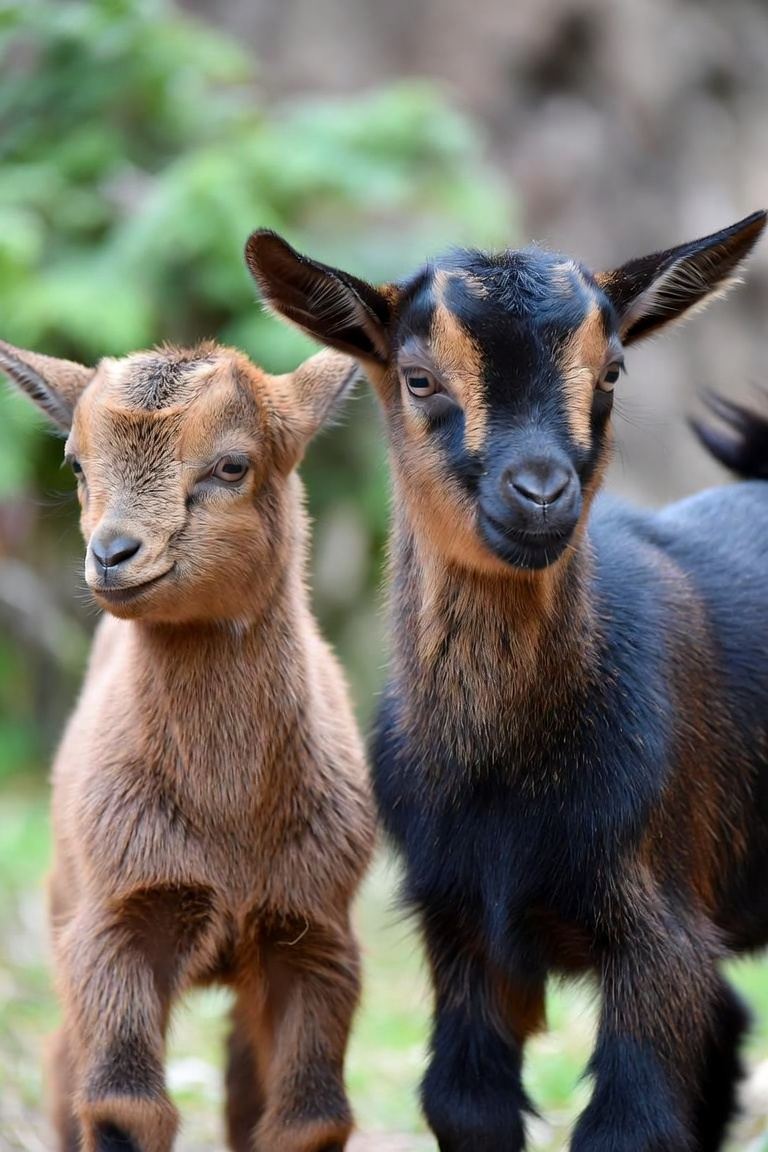
The animals are illustrations, and every one of them is labeled as such on the image itself. None of our livestock has arrived yet, so rather than borrow someone else's photographs and let you assume they were ours, we are using pictures that show roughly what is coming. Each one gets replaced with a real photograph as the animal turns up.
The pictures of the land, the fencing and the road work are real, and they were all taken here.
Do you take photographers?
Personal photographs on a tour are welcome and encouraged. Commercial and portrait shoots are by arrangement so we can plan around the animals, so please write to us first.
Are you certified organic?
No. We do not spray, we compost heavily and we hand weed, but organic certification is a paperwork and cost commitment we have not made. We would rather tell you exactly what we do and let you judge it than lean on a word.
Where does the goat milk go?
Into soap, all of it. We are not licensed to sell milk and have no plans to be. It makes a very good bar.
Can I volunteer?
Once we are properly running, yes, mostly through Bear's Buddies. Write to us and tell us what you are good at and how much time you actually have.
Are you at the farmers markets?
Our main channels are the roadside stand on Highway 19A and direct delivery to restaurants. Market attendance depends on which markets our regional district boundary allows us into, and we will post here if that changes.
Question we have not answered? Ask it. We answer every message, usually within a couple of days.
Contact and Directions
We are on Highway 19A in Qualicum Bay, coming up from Qualicum Beach and just before you reach Bowser, on the inland side of the road with the water directly across from us.
Qualicum Beach, BC V9K 2E5
Directions
From the south, Nanaimo and Parksville
Take Highway 19 north and come off at the Qualicum Bay exit, or stay on Highway 19A the whole way from Parksville if you would rather have the water beside you. From Qualicum Beach it is about twenty minutes north on 19A. We come up before Bowser, so if you reach Bowser you have gone a little too far.
From the north, Courtenay and Comox
South on Highway 19, off at Bowser, then down onto 19A and carry on a short way south. We are just past Bowser coming from this direction. Roughly forty minutes door to door.
Coming off the ferry
From Departure Bay, about an hour. From Duke Point, about an hour and fifteen minutes.
Parking
Free, level gravel, on site. Room for a truck and a trailer. Please do not park on the highway shoulder.
A note on the address. Our mail goes to Qualicum Beach because that is the post office we fall under, but the farm itself is further up the coast at Qualicum Bay. Put the postal code into your map and it will bring you to the right gate.
We are on the inland side of 19A, directly across the road from the water. Look for the stand and the sign. Mobile signal is patchy out here, so it is worth loading your map before you leave Qualicum Beach.
Send a message
The letter from the farm
Once a month. What is laying, what is blooming, when booking opens, and the occasional photograph of a goat somewhere she should not be.